Most project failures don't happen in software companies.
They happen in construction firms, healthcare operations, retail chains, and consultancies — teams that plan everything upfront, execute linearly, and discover the problem in the last week.
That's not bad execution. That's architecture.
Specifically, it's pure Waterfall applied to environments that stopped being predictable years ago.
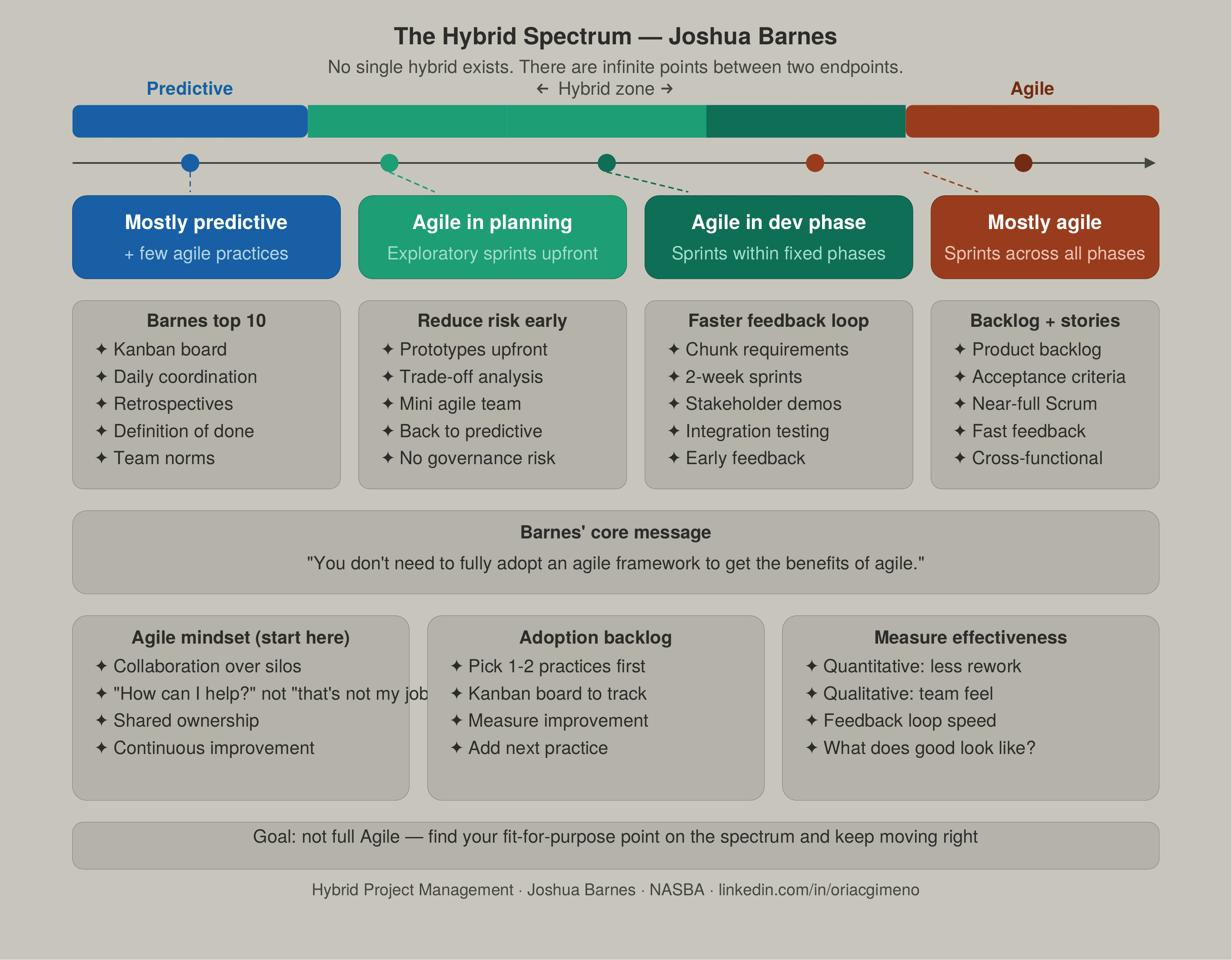
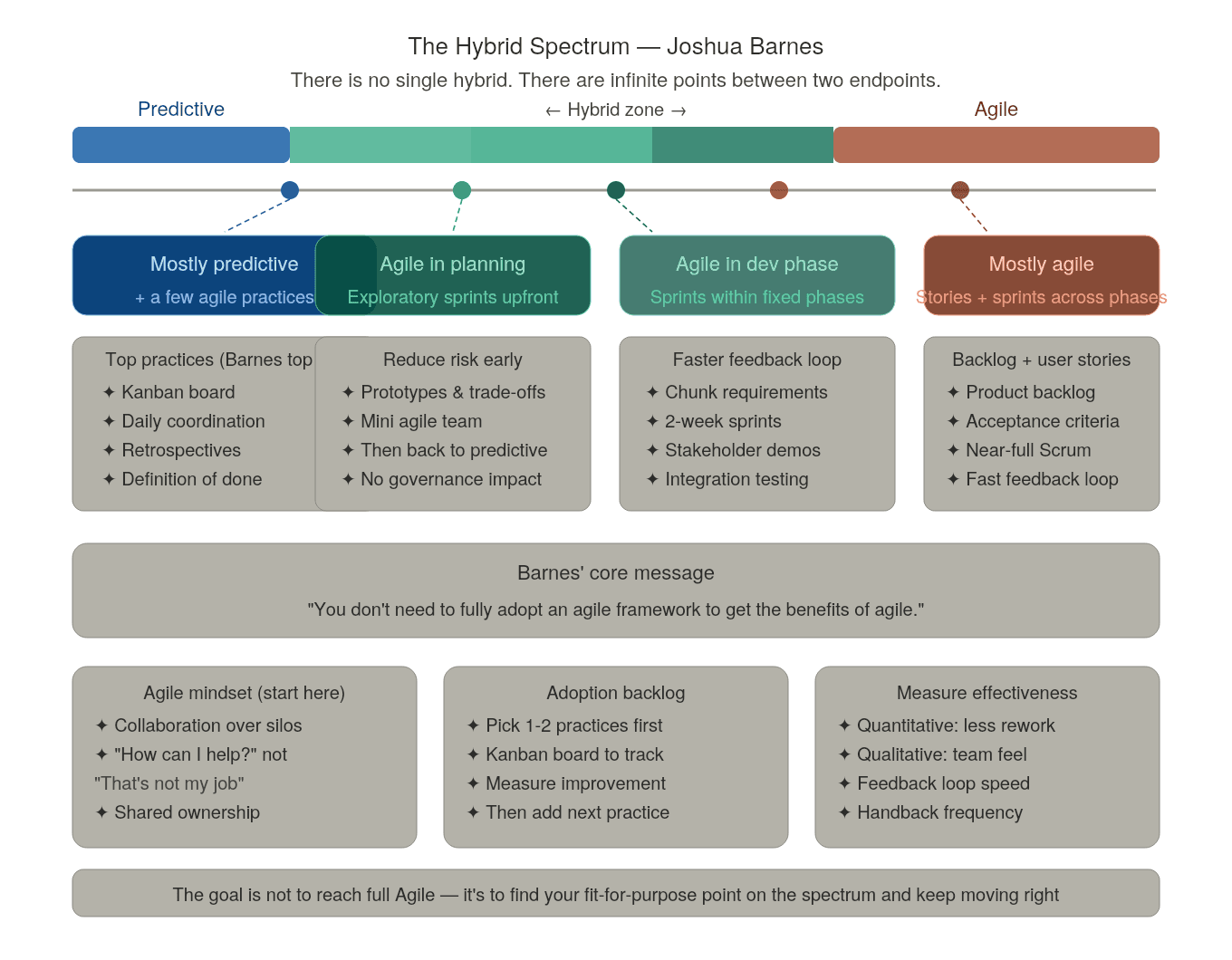
Joshua Barnes' course on Hybrid Project Management (NASBA) crystallised something I'd been observing for years across very different industries: the choice isn't Agile vs. Waterfall. It's knowing which parts of your project are predictable — and which aren't.
✅ Hybrid isn't a compromise — it's a diagnosis tool. Regulatory approvals, supplier contracts, legal milestones: these are sequential by nature. Sprint them and you create chaos. But scope definition, testing phases, and stakeholder feedback loops? Those are exactly where iterative cycles prevent expensive late-stage rework.
✅ The cost of pure Waterfall isn't delay — it's the feedback you never got. When the full scope is locked upfront, every assumption baked into month one compounds quietly until delivery. By then, the market has moved, the client's priorities have shifted, or the data tells a different story than the original brief.
✅ Most non-tech teams are already running hybrid — badly. Informal check-ins, scope changes managed via email chains, retrospectives that happen as post-mortems. Naming the framework doesn't change what you do. It changes when you decide to look.
Thanks to Joshua Barnes for a framework that actually travels beyond software teams.
Unpopular opinion: most PMOs that resist Agile aren't protecting quality. They're protecting the comfort of a plan that feels certain but isn't.
What's the most expensive assumption your last project locked in at kickoff?
hashtag#ProjectManagement hashtag#AgileLeadership hashtag#HybridPM hashtag#BusinessStrategy hashtag#ContinuousLearning hashtag#OriacGimeno